K-Beauty's Next Export Wave Is Color, Not Skincare
Skincare opened the door. Color is walking through it.
For years, K-beauty's global reputation was built on glass-skin serums and layered moisturizing routines. But the numbers coming out of Korea's retail channels right now tell a different story: color cosmetics are the category everyone is racing to own — and the infrastructure being built around it is serious.
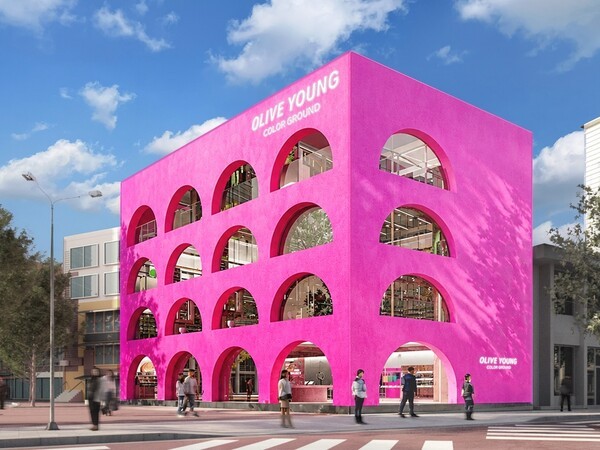
According to CJ Olive Young, color cosmetics sales on their platform grew at an average of 36% annually over the past five years. In 2023 alone, the category grew roughly 50% year-over-year — compared to 11% growth for the domestic beauty market overall. That gap is not a fluke. Korea's food and drug authority (MFDS) reported that color cosmetics exports from January through September this year reached $1.11 billion. The global color cosmetics market this year is estimated at $105.2 billion — and Korea is still a relatively small slice of it, which is exactly why every major retailer is moving now.
The most visible signal of this shift is Olive Young's first color-dedicated store, Color Ground Hongdae, which opened in Mapo-gu, Seogyo-dong on the 20th of this month. The store spans four floors and 174 pyeong of retail space, and unlike a standard Olive Young, the shelves are organized by product type, texture, and function — not by brand. The third floor runs a "Rookie Zone" where new brands account for 26% of all stocked labels, alongside a personal color diagnosis service called Skin Scan Color Fit and a quick makeup trial space called Quick Touch-Up Mood. Olive Young chose Hongdae deliberately: in the January–October window this year, the Hongdae area store saw teens and twentysomethings make up more than half of sales, and foreign visitors account for 84% of the customer mix. The plan is to use this location as a launchpad — cultivating domestic K-color trends and letting inbound tourists carry them abroad.

Fashion platform Musinsa is running a parallel play. Its first standalone beauty store, Musinsa Beauty Hongdae, opened September 11, and in the first three days it posted cumulative sales of 250 million won. This month it opened Musinsa Beauty Seongsu at 400 pyeong, with color brand Two A N taking the first slot in the ground-floor pop-up zone. Musinsa's own-label color brand Oddtype — launched in 2023 — grew its transaction volume 166% in the first half of this year versus the same period last year. It's already in Kuwait (five shopping malls), 27 AAFES offline stores in the US military retail network, 50 stores in Australia through local distributor W Cosmetic, Loft, Plaza, and @cosme in Japan, Guardian in Malaysia, and Wichi is sold across roughly 300 Don Quijote stores in Japan.
Fashion app Ably launched its first in-house beauty brand, Byably, in April, targeting the Gen Z "Zalpha" demographic. The debut lineup was a cushion and a cushion refill kit, developed using platform data from an average of 400 million daily interactions to map purchase patterns and review signals. Ably followed up with a collaboration PB line with Clio — Ably Label — launching a cushion and primer, then in September dropped Byably's first full color line, the Be Collection, exclusively on the Ably app: lip, cheek, and eye products each in five shades.

The most unexpected angle in this whole story is the ultra-low-price channel. Daiso partnered with makeup artist Jung Saemmul's beauty brand in January to launch a Daiso-exclusive line, Zoom by Jung Saemmul, priced between 1,000 and 5,000 won. Jung Saemmul's mainline products typically sit in the 20,000–50,000 won range, so the price gap is significant. The line centers on base makeup — foundation, cushion, and fixer — and sold out repeatedly on Daiso Mall immediately after launch. Daiso's skincare and color cosmetics category grew roughly 70% in 2025 versus 2024, and was still up roughly 30% in January of this year versus January last year. In late August, Daiso opened its first beauty-dedicated store in Konkuk University area in Gwangjin-gu, Seoul — 20 pyeong with beauty products making up 80% of the assortment.
Convenience store GS25 also entered the space, launching a seven-piece exclusive color line with brand Son & Park — Son & Park Hearty — all priced at 3,000 won, in May of last year.

What's happening across all these channels — specialty retail, fashion platforms, dollar-store equivalents, convenience stores — is a coordinated (if competitive) bet that color is where K-beauty's next export chapter gets written. The KOTRA New York office reported that the US color cosmetics market last year was worth $21.4 billion, with premium products showing steady growth alongside demand for functional and diverse color options. Korea is building the domestic color infrastructure now, using inbound tourism as a real-time test market, and the brands proving themselves here are already moving into Japan, Southeast Asia, Australia, and the US. The skincare wave took years to build. The color wave has a running start.
More from K-Beauty

Hera Black Cushion Just Hit 14 Million Units Sold

K-Beauty Is Splitting Europe: Pore Pads Win the UK, Capsule Cream Tops Spain

HERA Black Cushion Holds Korea's Top Cushion Spot for Eight Straight Years

Torriden's Dive-In Line Just Hit a Global Sales Milestone

Kurved Just Won Runner-Up at Asia BeautyTech Awards 2026

Korea's Week-3 November Skincare Drops Are All About Ingredient Precision