Horipro producer on K-musicals: Japan-Korea co-production "will not be a choice but the future"
At Seoul's K Musical International Market, Horipro's Ikawa Gaoru laid out a vision for Japan-Korea joint production as the industry's next frontier.
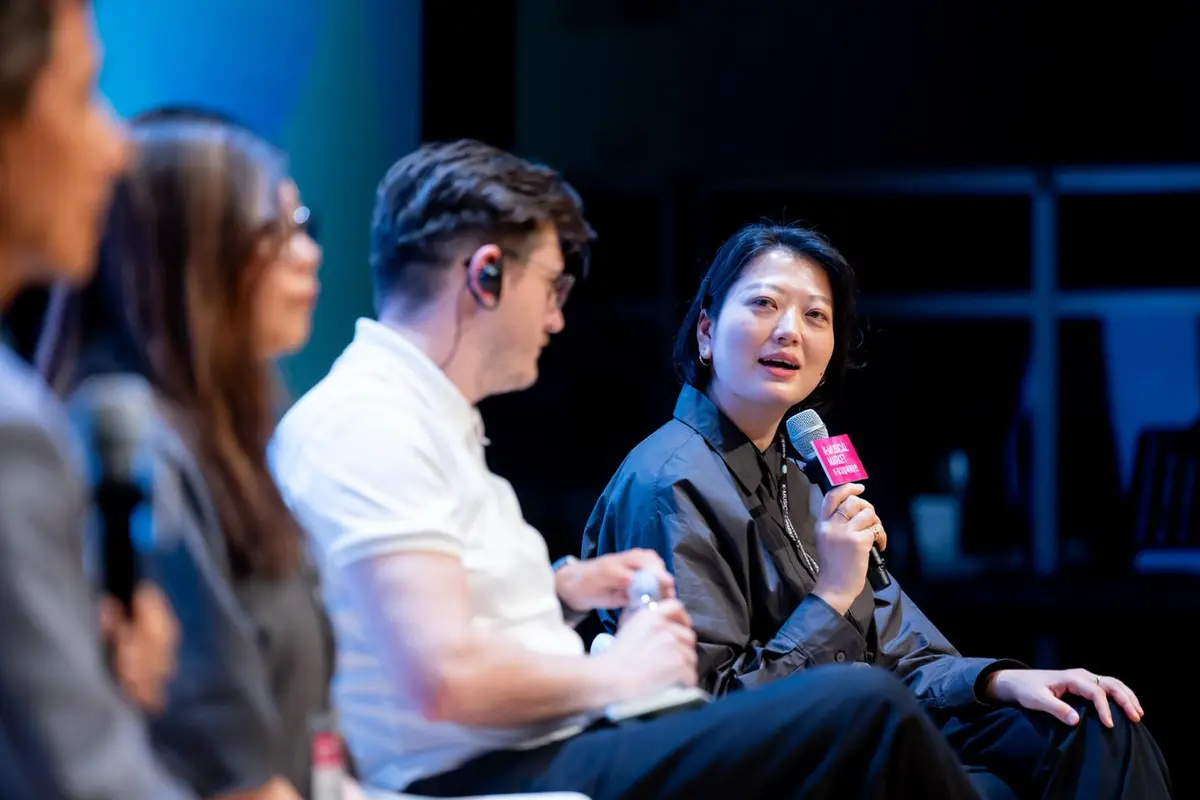
The K Musical International Market ran June 29 through July 3 at COEX in Gangnam-gu, Seoul, organized by the Arts Management Support Center under the Ministry of Culture, Sports and Tourism. Ikawa Gaoru, producer and head of global business at Japan's Horipro, was among the speakers.
Horipro's catalog spans continents. The company has produced Billy Elliot and Mary Poppins. Harry Potter and the Cursed Child opened in Tokyo in 2022 as Asia's only production and runs through the end of this year. The manga-based musical Death Note, which succeeded in both Japan and Korea, opens in an English-language version in London on the 30th. Shirotsumekusa (白爪草), a two-person original musical, begins performances in China from the 10th. A stage adaptation of Murakami Haruki's novel The End of the World and Hard-Boiled Wonderland has upcoming dates in Britain, France, and Korea.
Ikawa pointed to Maybe Happy Ending — which recently established itself on Broadway — as proof of Korean work's global reach. Horipro itself premiered the Korean webtoon-based musical Misaeng in Japan last year. "I did not choose 'Misaeng' because it was a Korean work," Ikawa said. The draw was its message that people can challenge toward the future regardless of age.
One structural observation stuck with him about the Korean industry: the near-total separation between large-theater productions and the Daehangno small-theater circuit. "The large theater and Daehangno small theater markets are completely separated like two different worlds," he said. Breaking down that scale boundary would generate greater synergy for talented people and works currently confined to small venues. (Korea's Daehangno district is essentially its own ecosystem — a strength, but also a ceiling.)
His core argument: the Korean industry's instinct to target the global market from the planning stage is its greatest asset. Japan-Korea co-production from the development phase would let both countries secure each other as markets simultaneously, scale up budgets, and push higher-level work onto the world stage. "Japan-Korea co-production will not be a choice but the future," he said. Korean production companies have been holding New York workshops in succession as part of that global push.
Cheer the story


